
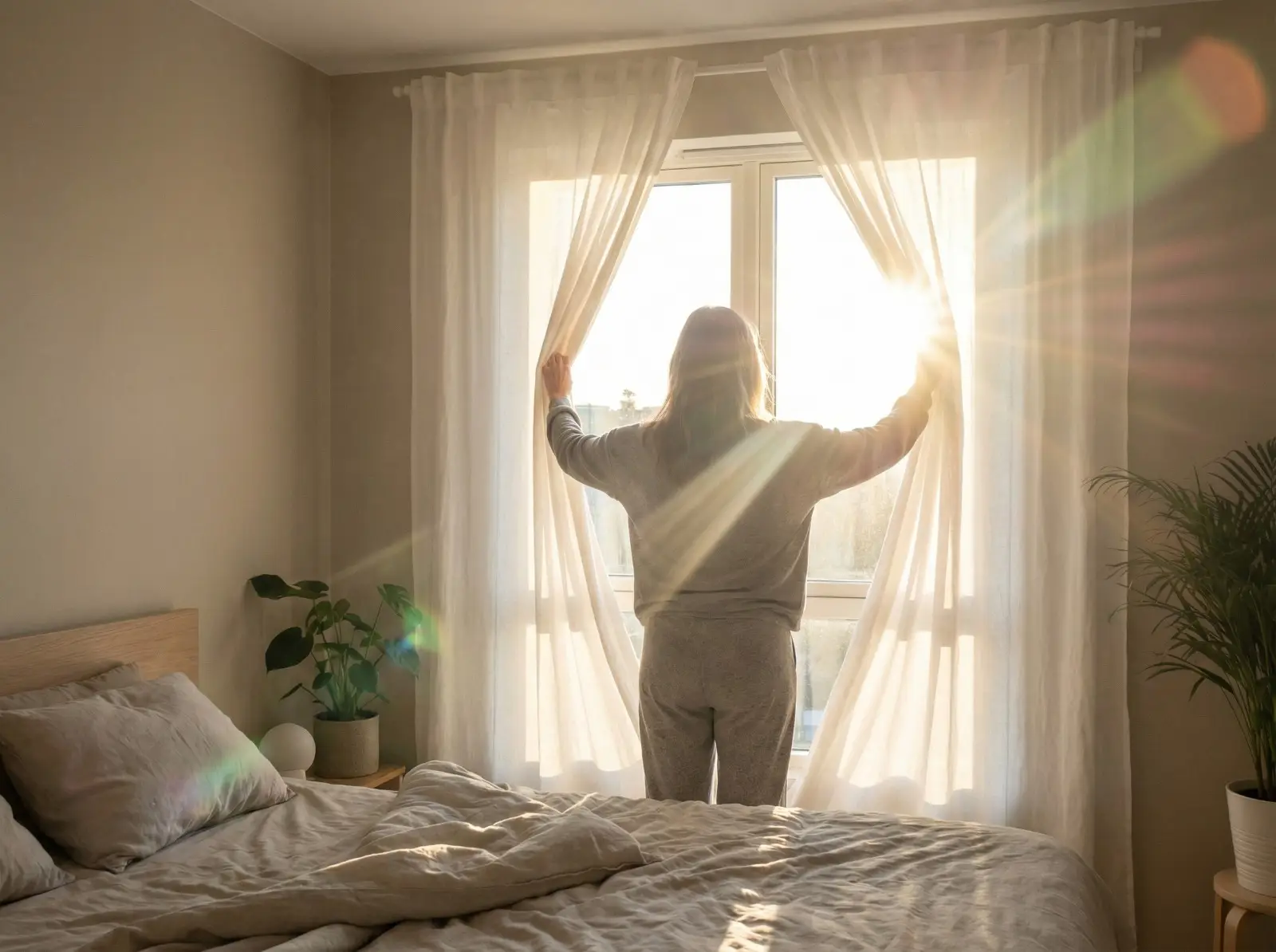
Light powers our cells, sets our internal clock, and eases symptoms of seasonal depression.
Listen to our podcast about the article:
Just thirty minutes of morning light can significantly improve your mental health. That short period is enough to reset the biological systems that control your mood, energy, and sleep—the same systems that winter’s long darkness gradually weakens.
Emerging research shows that light therapy for depression offers something medications can’t: the precise environmental signal your body needs to synchronize circadian rhythms and produce energy naturally. Instead of just changing brain chemistry, light provides the physical cue needed to reset your internal clock and improve energy and mood. But here’s the catch—timing is crucial, and a simple 19-item questionnaire can help you find out exactly when your body needs that light most.
How Light Affects Mood and Circadian Rhythm
Light serves a much deeper purpose than simply illuminating our surroundings. It resets our circadian rhythm, energizes cellular processes, and triggers the release of neurotransmitters and hormones essential for mood regulation. When the body lacks this vital input, mental health suffers.
Specialized receptors in the eyes send information about environmental light to the suprachiasmatic nucleus—the brain’s “master circadian clock” that regulates hormones important for sleep, mood, and appetite. Sunlight promotes the production of melatonin and serotonin, enhancing their ability to activate at appropriate times and support mental health.
Winter disrupts this finely tuned system. When melatonin and serotonin become out of sync, mood can decline into depression. Research shows that circadian rhythms are especially affected by light changes during winter compared to summer, leading to shifts in sleep-wake cycles that negatively impact emotional health.
These disruptions also impact energy levels. People experiencing seasonal depression often report persistent fatigue and sluggishness. Research shows that sunlight—especially red light wavelengths—can penetrate the body and support mitochondria, the cellular structures responsible for energy production. The eyes contain particularly high levels of mitochondria, making them very responsive to light and capable of absorbing daylight’s energizing effects. Mitochondrial dysfunction has been linked as a possible underlying factor in the development of depression.
From Skepticism to Scientific Validation
Morning light exposure is fundamental to our circadian rhythm and to depressive symptoms, according to Michael Terman, a professor of clinical psychiatry, editor-in-chief of the Center for Environmental Therapeutics, and a pioneer in light therapeutics.
Terman recalls how the psychiatric community dismissed light therapy as a valid treatment for SAD after he helped establish the Society for Light Treatment and Biological Rhythms in 1988. At that time, psychiatrists were trained to cycle through antidepressant medications until one worked—an expensive, time-consuming process that often resulted in only partial improvement.
The rapid therapeutic effects of bright-light exposure have consistently surprised researchers over decades of investigation, Terman noted. Unlike pharmaceutical treatments, light therapy provides a clear biological explanation for individuals whose mood worsens during the winter season.
A range of behavioral symptoms appeared before the psychological crash, especially trouble waking up in the morning, overall fatigue, and a craving for carbohydrates that was absent in summer,” Terman explained. “These symptoms culminated after a month or more with a fall into clinical depression, and the entire set of symptoms could lift quickly with bright light therapy—even in less than a week.”
A systematic review and meta-analysis confirmed the effectiveness of light therapy. One randomized clinical trial showed that morning light therapy is as effective as cognitive-behavioral therapy—a gold-standard treatment for SAD.
However, Terman’s 2001 clinical trial showed that outcomes depended greatly on timing. Morning light therapy for SAD was most effective when given early in the circadian cycle, reaching an 80 percent remission rate compared to only 30 to 38 percent for evening or late-morning treatments.
Terman emphasized that the most important thing for SAD sufferers to understand is where their internal circadian rhythm lies. That knowledge will reveal the most effective time to use light therapy.
Light therapy administered at the wrong time may prove ineffective. Fortunately, identifying the optimal window doesn’t require measuring melatonin levels. The Center for Environmental Therapeutics offers a 19-item questionnaire that can reveal your rhythmic state based on daily activities. When completed after winter symptoms emerge, it provides a personalized start time for bright light therapy—taking the guesswork out of treatment.
Practical Strategies for Winter Depression Relief
Several evidence-based approaches can help you maximize light exposure during winter months, reducing depressive symptoms and supporting circadian alignment.
Maintain Consistent Wake Times
Rise at a consistent time that mirrors your summer schedule. If you don’t yet have a light therapy box, increase indoor lighting or open window shades immediately upon waking. Resist the temptation to sleep in on weekends—doing so allows your circadian rhythm to drift back toward the winter pattern you’re working to overcome.
Get Light Exposure Within 30 Minutes of Waking
Research has found that a 30-minute bright light treatment each morning upon waking significantly improves depressive symptoms. The current recommendation is to use a 10,000-lux light box that simulates a summer sunrise, according to Terman.
Natural morning sunlight also helps synchronize circadian rhythms and improve sleep quality. Insufficient exposure can delay biological timing and disrupt hormone regulation. Terman noted that even overcast days provide beneficial light.
Aim for 30 Minutes to 1 Hour of Outdoor Light Daily
Terman advises seizing every opportunity to be outdoors when the sun is up—whether during your commute, on breaks, or over weekends. Winter weather doesn’t negate the benefits; sunlight can pass through clothing and still deliver positive effects.
A study found that people who reported more than one hour of outdoor daylight exposure per day during the winter months experienced fewer depressive symptoms than those with less than one hour of daily exposure.
Establish a Proper Nighttime Routine
Evening habits play a crucial role in SAD treatment. Terman recommends avoiding bright household lighting for several hours before bedtime. “This will maximize the therapeutic effect of morning bright light and help normalize your winter sleep cycle,” he explained.
Artificial light exposure at night disrupts your circadian rhythm, affecting hormones like melatonin and glucocorticoids that control sleep and mood. Indoor lighting during winter can be up to 1,000 times brighter than natural outdoor light at night, confusing the body’s internal clocks.
Switching to softer, warmer lights in the evening—or wearing circadian-friendly glasses that block blue light—signals the body to prepare for sleep. Avoiding screens once you’re ready for bed can be especially helpful.
Reclaiming Your Energy and Mood Through Light
If winter feels like a heavy burden, light therapy for depression provides a simple way to boost mood and energy. Seasonal affective disorder is a strong reminder that the body’s biological systems are missing a crucial signal—light—and that intentional choices can help restore equilibrium.
By prioritizing morning light exposure, maintaining consistent sleep schedules, and reducing artificial light at night, you can align with your body’s natural circadian rhythm instead of working against it. Not sure where to start? Take this circadian rhythm assessment to find your optimal light therapy timing—then let this winter be the season you regain control.
Note: This content is not intended to substitute professional medical advice, diagnosis, or treatment. If you are experiencing symptoms of depression, please consult a qualified healthcare provider.
